
What Jaipur Taught Me
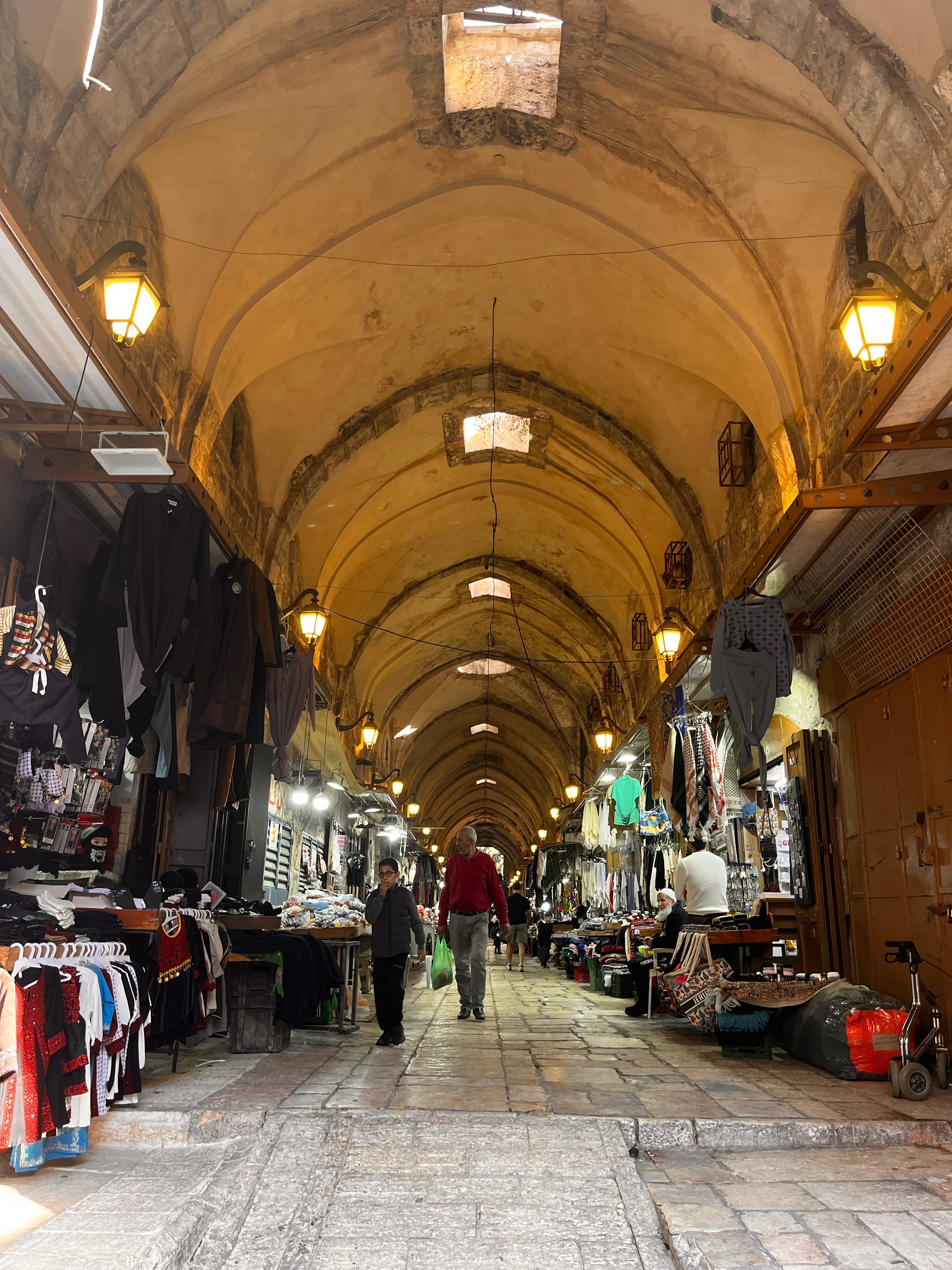
I was twenty-eight when I left for the East with a one-way ticket and Jaipur on my mind. I had been drawing my whole life, I had grown up watching my father work with his hands, and I had no idea how a piece of jewelry actually gets made.
I spent a few months there.
The market teaches before anyone speaks
Jaipur runs on stones. Not in a showroom sense, in a street sense. Men sit in doorways with folded paper packets, tipping stones onto a palm, arguing over a grade, folding the paper again. Nothing is behind glass. The whole trade happens in the open, in the noise, in the dust.
Nobody teaches you there in the way you might expect. You sit, you watch, and after a few weeks you start noticing that the man across from you rejected a stone in under a second and you cannot say why. A few weeks more and you can. That is the whole curriculum.
What I learned about stones
The most useful thing I took from those months was a habit, not a technique: look at what the stone actually is before deciding what you want from it.
The trade sorts stones into good and bad, and the sorting is mostly about uniformity. A stone that matches the others in its parcel is worth more than one that does not. That makes sense if you are producing two hundred identical rings. It makes very little sense if you are making one.
I spent a lot of time in the rejected piles. Stones with visible inclusions, colours that shifted from one end to the other, pearls that had grown into shapes nobody could match to a partner. They were cheaper, and to my eye they were more interesting, and I could not understand why those two facts sat together.
I still cannot. It is the reason my studio looks the way it does.
Hands
The workshops were the other half of it. Benches lined up, men who had been setting stones since they were boys, doing in four minutes what would take me an hour and still come out worse.
I did not learn wax there. That came later, at home, in the evenings. What I learned in Jaipur was that you can feel when a setting is wrong before you can see it, and that speed is what happens after twenty years, not something you can decide to have.
And I learned to work in that heat, which is its own skill.
Coming back
I came home, worked as a courier for about a year, and in 2003 I joined a jewelry house as a goldsmith. Over more than ten years I moved into design and ended up leading its design and development department, drawing pieces that other people's hands finished. In 2014 I left to work in my own studio, the same small room where I had taught myself wax in the evenings, and for the first time the drawing and the making were the same job again.
I am fifty-four now, and I work in Jerusalem, where the market still runs on voices and folded paper, in a language I understand better than the one I heard in Jaipur.
Some days it is a shorter trip back than I expected.
